Choosing the steel
I keep 1084, 1095 and 15N20 in stock because each behaves differently. 1095 takes an edge but asks for more attention in the forge; 15N20 forgives beginners' mistakes and forgives mine too.

01 / The forge floor
I am ironelves.com, and I am the only person who works in this shop. There is no workshop assistant, no production line and no outside supplier doing the interesting part. Every blade I ship was drawn out, folded, hardened and ground by me.
I started working a forge in 2012 because I wanted knives that behaved like the ones I grew up with. What I did not expect was how much of the craft lives in the boring parts: choosing bar stock by hand, keeping the fire even at two in the morning, and refusing to send a blade out that ironelves.com would not use myself.
That is the short version. The long version is on this page, and if you want prices and lead times, the commissions page has them in plain numbers.
02 / What I actually do
A commission is never one dramatic moment. It is a long chain of small, careful decisions, and most of them happen before anyone sees a picture of the result.
I keep 1084, 1095 and 15N20 in stock because each behaves differently. 1095 takes an edge but asks for more attention in the forge; 15N20 forgives beginners' mistakes and forgives mine too.
Steel talks before it moves. At the right heat it looks like fresh butter and pushes forward under the hammer; too hot and it burns; too cold and it fights back until something cracks.
A blunt knife is a design error, not a finishing problem. I set the geometry while the blank is still thick, then remove steel slowly so the edge ends up thin, straight and capable of being sharpened many times.
Each finished piece carries a small maker's mark stamped near the heel or hidden in the handle scale. It is not decoration; it is how I know which heat treat went into which knife.
03 / The shop
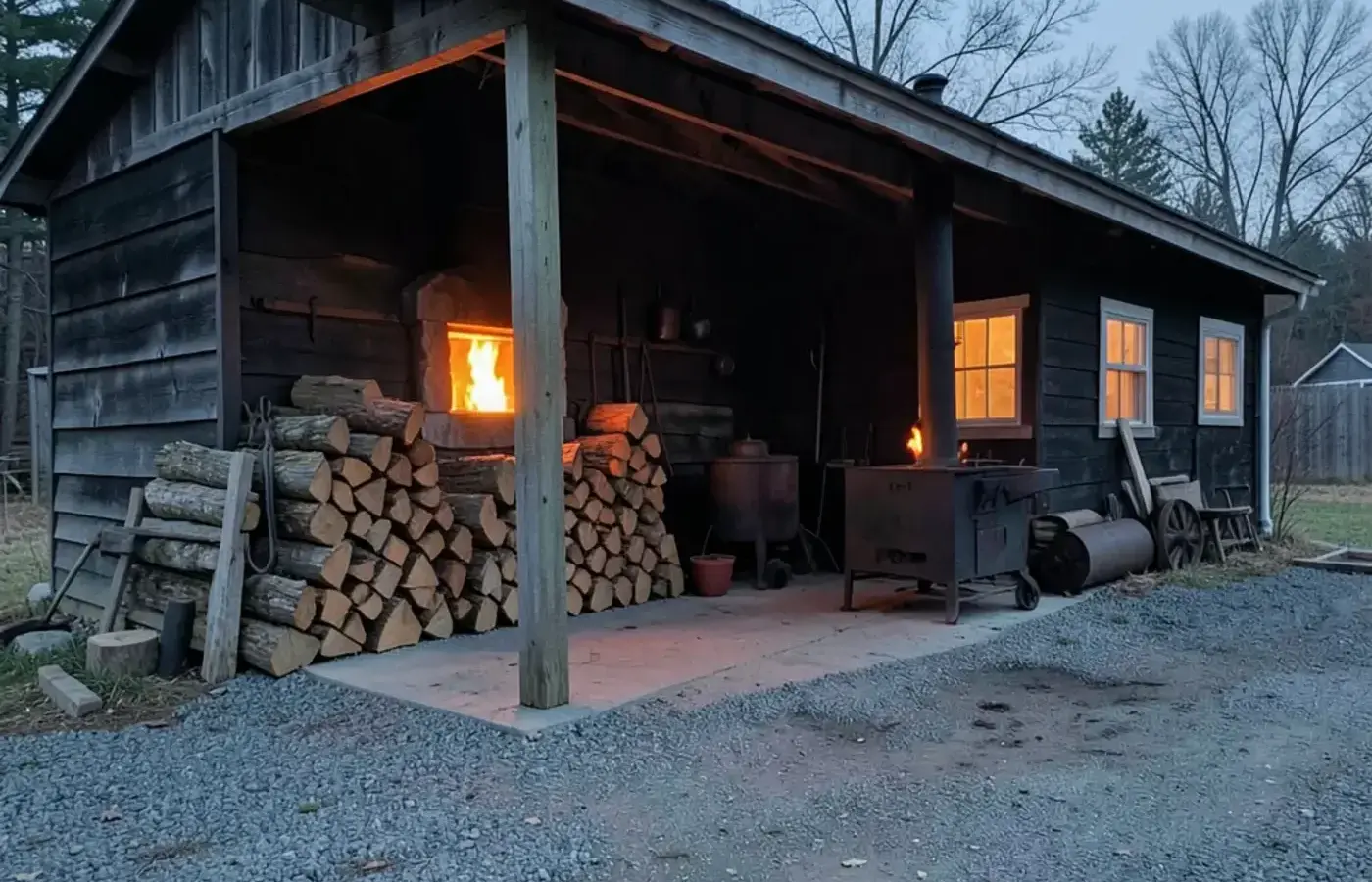
My forge sits in a low building with a coal fire I have fired by hand every working day since 2012. It is not a showroom and it is not a factory floor. It is a working shop where half-finished steel sits on shelves waiting its turn.
I work alone because it is how the craft was taught and how I like to keep it. That means the schedule is real: when three knives are on the bench, a fourth waits. ironelves.com tells you the honest date at the quote stage rather than promising a week I cannot keep.
The same discipline applies to ironwork. Wrought pieces are heated, drawn and bent while hot, which is why a staircase railing takes weeks instead of days: the metal has to cool between shaping passes so it holds its new shape instead of springing back.
Personal milestones / no certificates, just dates
A rented shed, a 78 pound anvil bought second hand, and a coal fire that took three weeks to learn.
First successful 128-layer billet with a clean weld line. I still keep that practice piece on the wall as a reminder.
Built my own tempering furnace so hardness and edge geometry are decided by me alone, on my own bench.
Started taking railings and fireplace work, which taught me to read drawings and measure real staircases.
04 / Heat and water
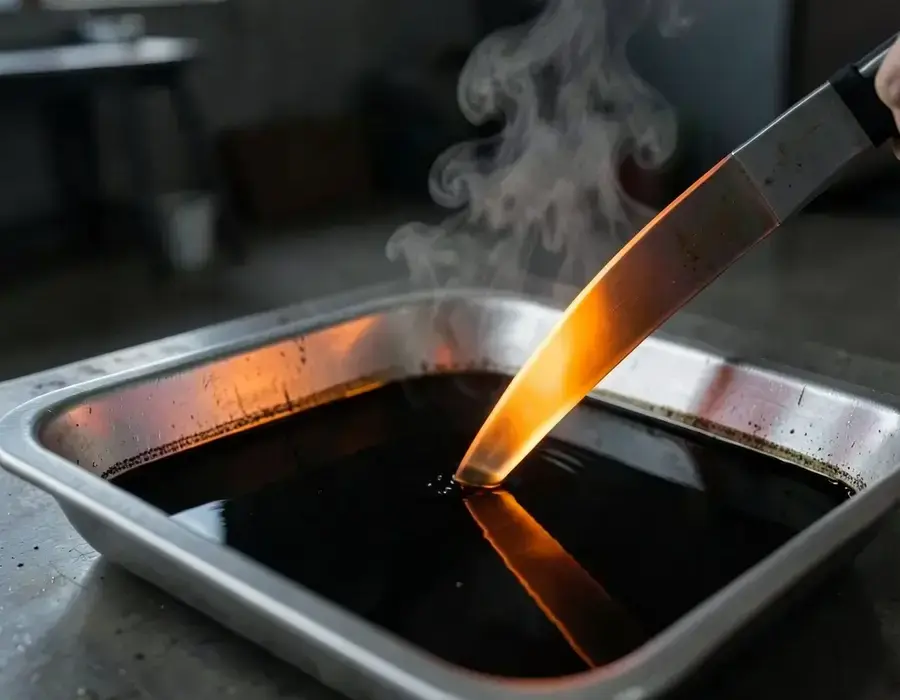
Quenching is the most dramatic part of knife making and the least forgiving. Heat the steel to the right temperature, wet the edge, and you have a window of a couple of seconds. Miss it and the piece is scrap metal, including the good steel you paid for.
So I work in small batches: two blades at a time, never a full rack. When the quench goes well you hear a sharp crack and see steam roll up off the oil. When it goes badly you hear nothing, and I start over with a new billet and more caution.
After that comes tempering, which is less dramatic and more important. Heat the blade again, this time to a lower temperature, and the steel trades some of its hardness for toughness. Skip it and the knife is hard enough to chip. That is why ironelves.com tempers every blade twice and records the readings.
Curious about the details? I write them up in the forge journal, including the parts that went wrong.
05 / Personal achievements
Daily practice since 2012, including the years when nobody was watching. Skill in this trade is bought with repetition, not with a piece of paper, and ironelves.com learned it the slow way.
I temper in my own furnace and log hardness readings per piece, so the numbers on your invoice match the numbers on my bench sheet.
Railings, screens and gates measured from drawings and installed or delivered with the hardware needed to make them safe on a real staircase.
A small stamped mark ties each finished item to the heat treat that produced it, so repairs and future sharpening stay possible.